
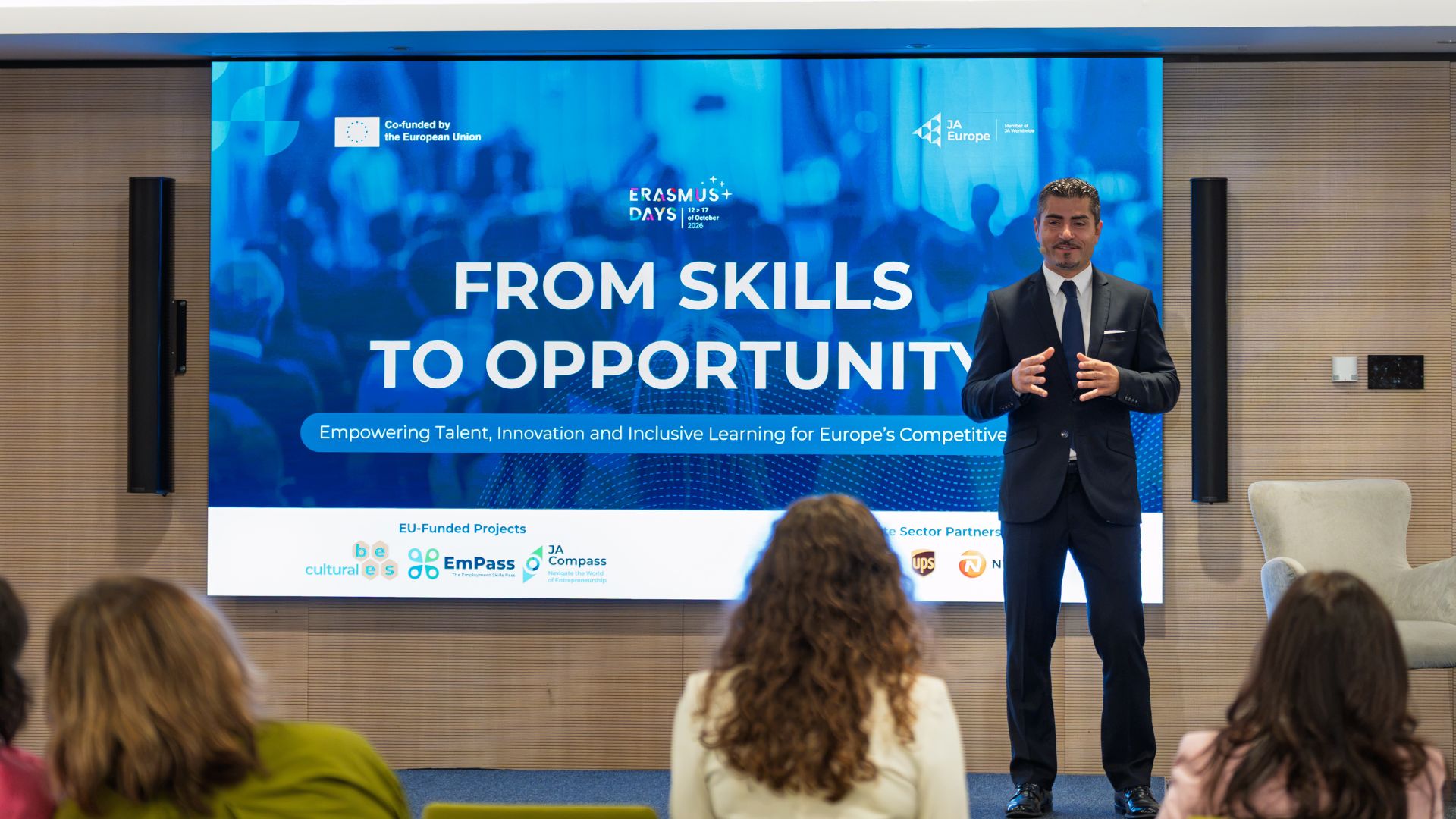
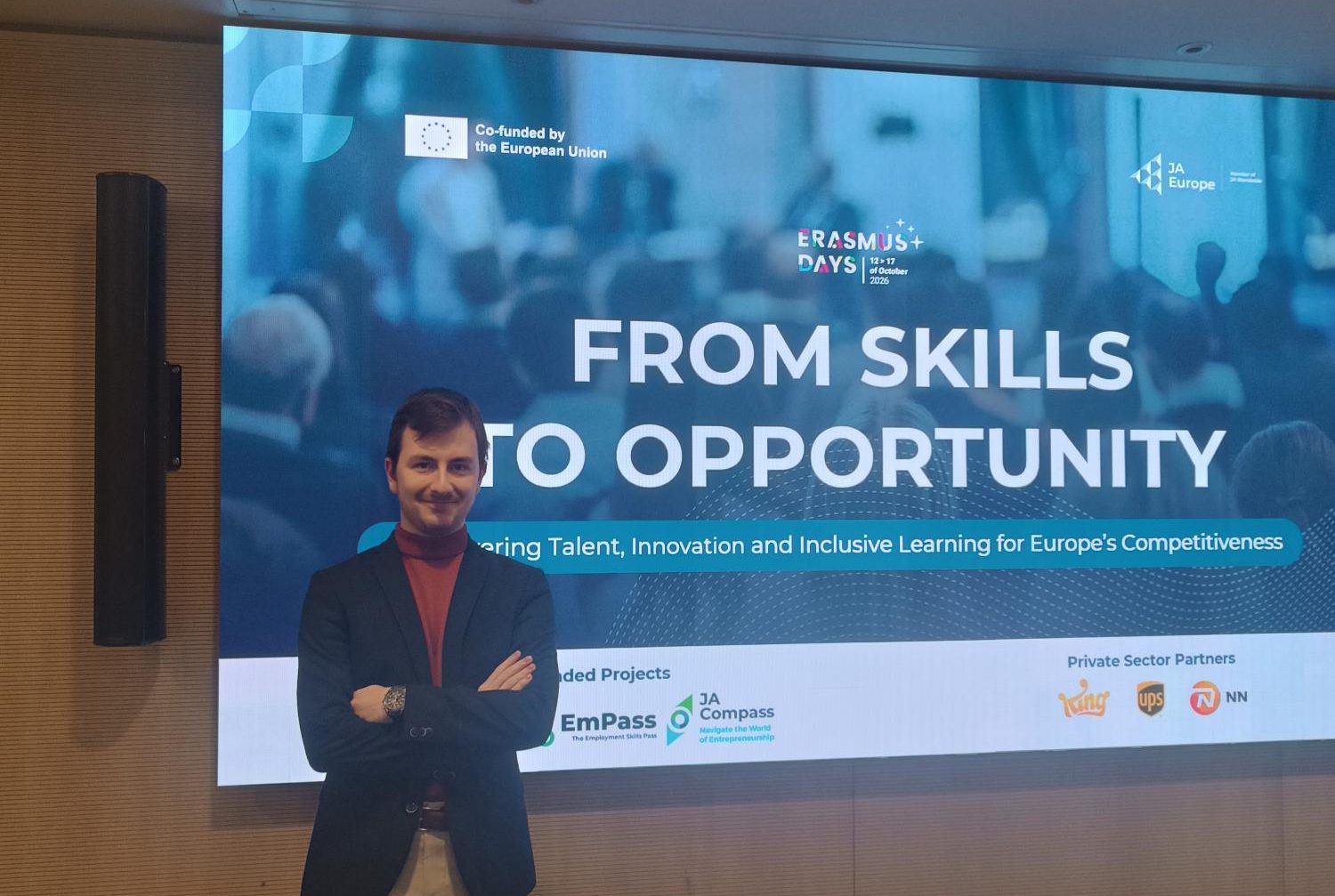
JA Europe’s From Skills to Opportunity forum explored these connections, reinforcing the relevance of Skills4Retail’s work to turn changing workforce needs into accessible learning opportunities. Representing Schuman Associates and the Skills4Retail project, I attended this event and here are some highlights:
Connecting Skills with Opportunity in Retail
The opening remarks for the first session placed recognition and inclusion at the centre of the discussion. JA Europe CEO Salvatore Nigro highlighted valuable skills that young people develop but cannot readily demonstrate on a CV. European Parliament Vice-President Victor Negrescu called for investment in education and skills that reaches disadvantaged communities and delivers meaningful opportunities.
For Skills4Retail, these messages underline why skills development must connect with people’s different starting points and career ambitions.
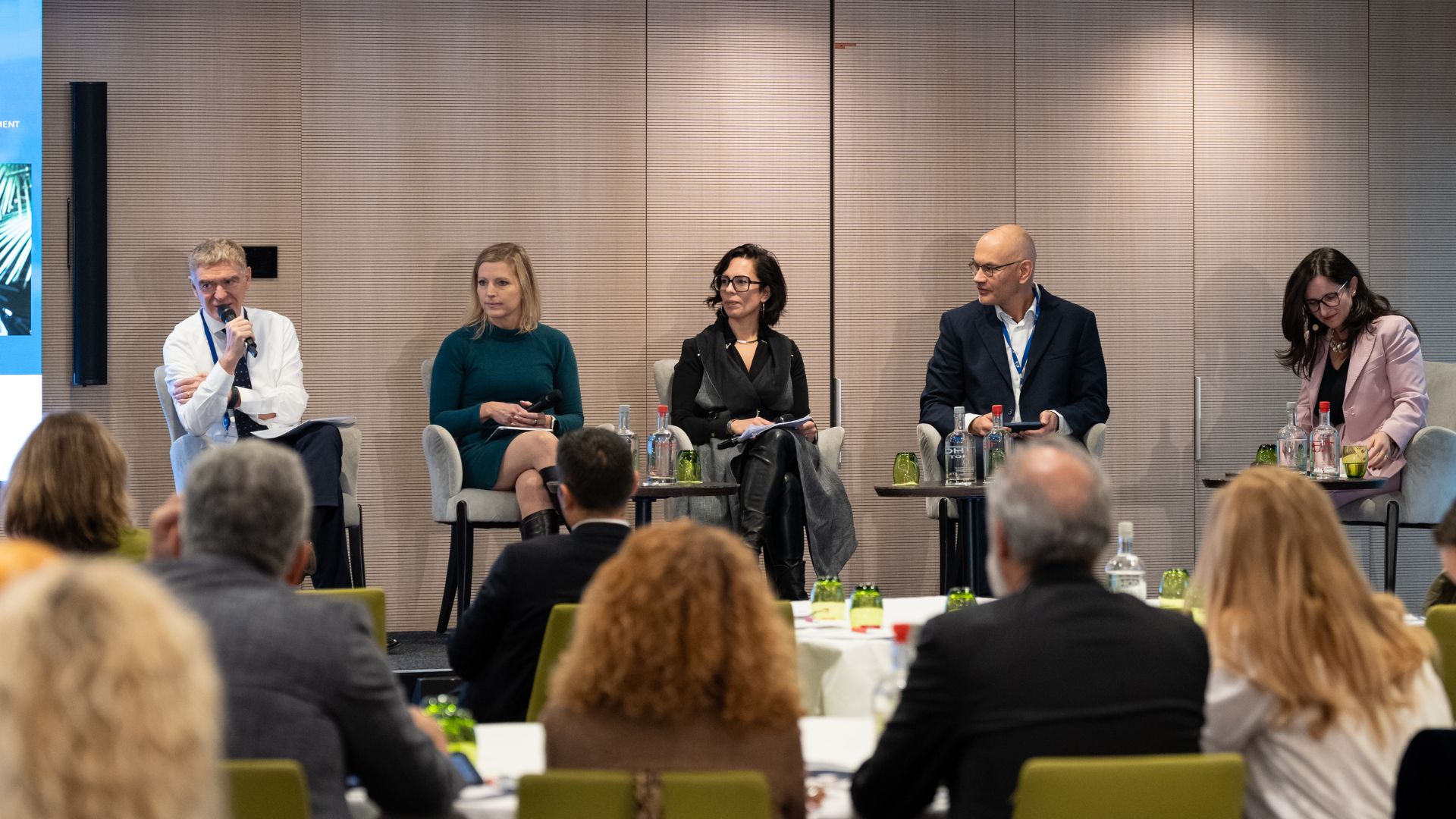
The panel, Skills, Mobility and Innovation for Europe’s Competitiveness, developed this challenge further. Employers’ needs are changing, existing capabilities can remain invisible, and workers may struggle to find suitable training. As AI reshapes tasks, technical competence needs to be accompanied by judgement, communication and adaptability.
Skills4Retail addresses these needs through an industry-informed European Retail Skills Strategy and training programmes for current and future retail professionals. Its occupational analysis and consultation with retailers help connect learning priorities with workplace requirements, recognising that frontline workers, managers and newcomers need different pathways.
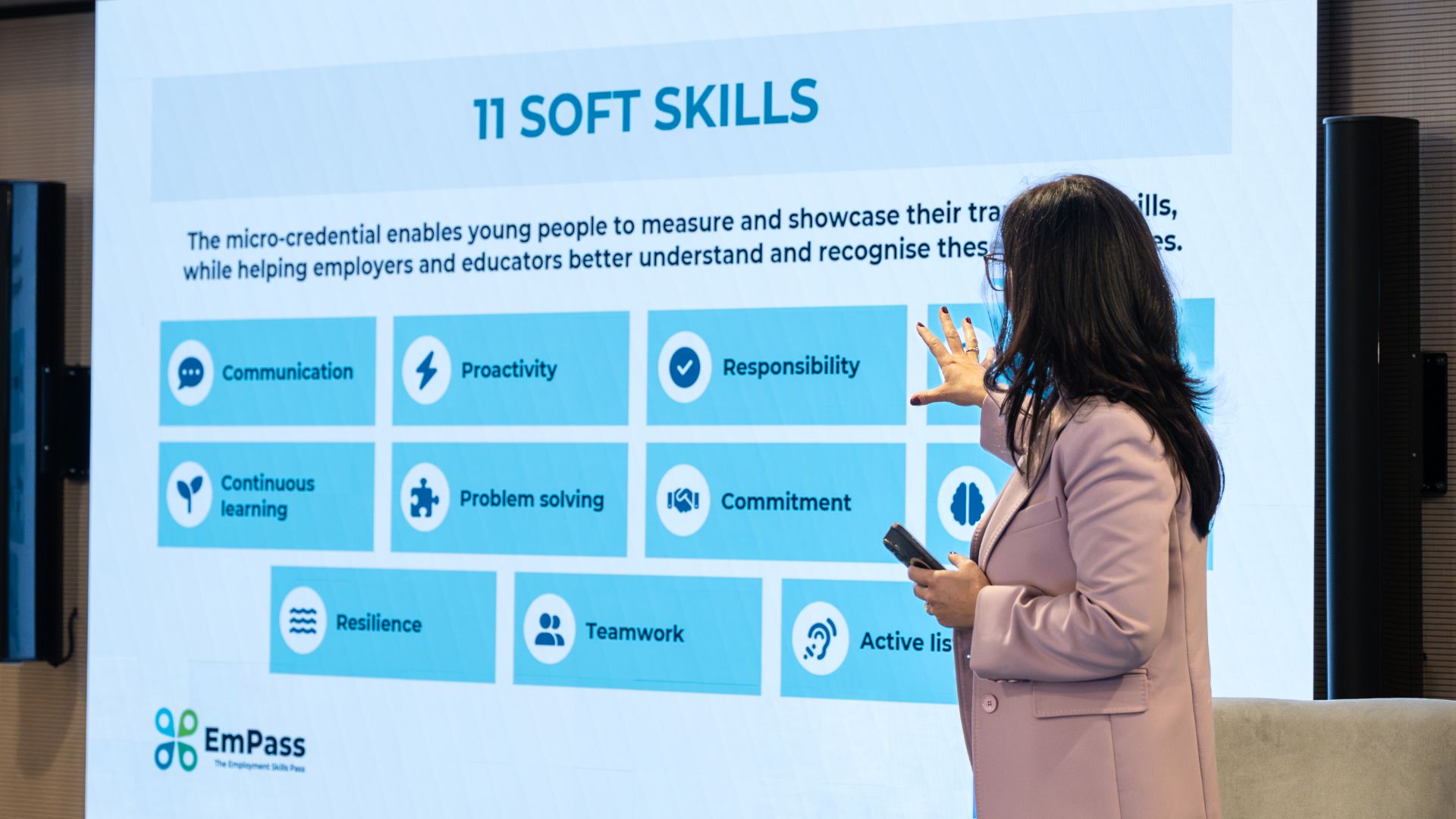
The discussion of micro-credentials also highlighted the importance of clear evidence of competence. For Skills4Retail, this reinforces the value of learning outcomes that help participants understand – and explain – how their capabilities apply to retail work.
Supporting Learning Throughout a Changing Career
Opening the second session, European Commission Executive Vice-President Roxana Mînzatu emphasised that talent does not automatically translate into opportunity. An experienced worker may need support when technology changes their job; a young person may need practical experience to turn an idea into action. She highlighted continuous learning, apprenticeships and mentoring as ways to connect skills with real opportunities.
This message speaks directly to Skills4Retail’s purpose: supporting people entering the sector while helping the existing workforce develop new capabilities.
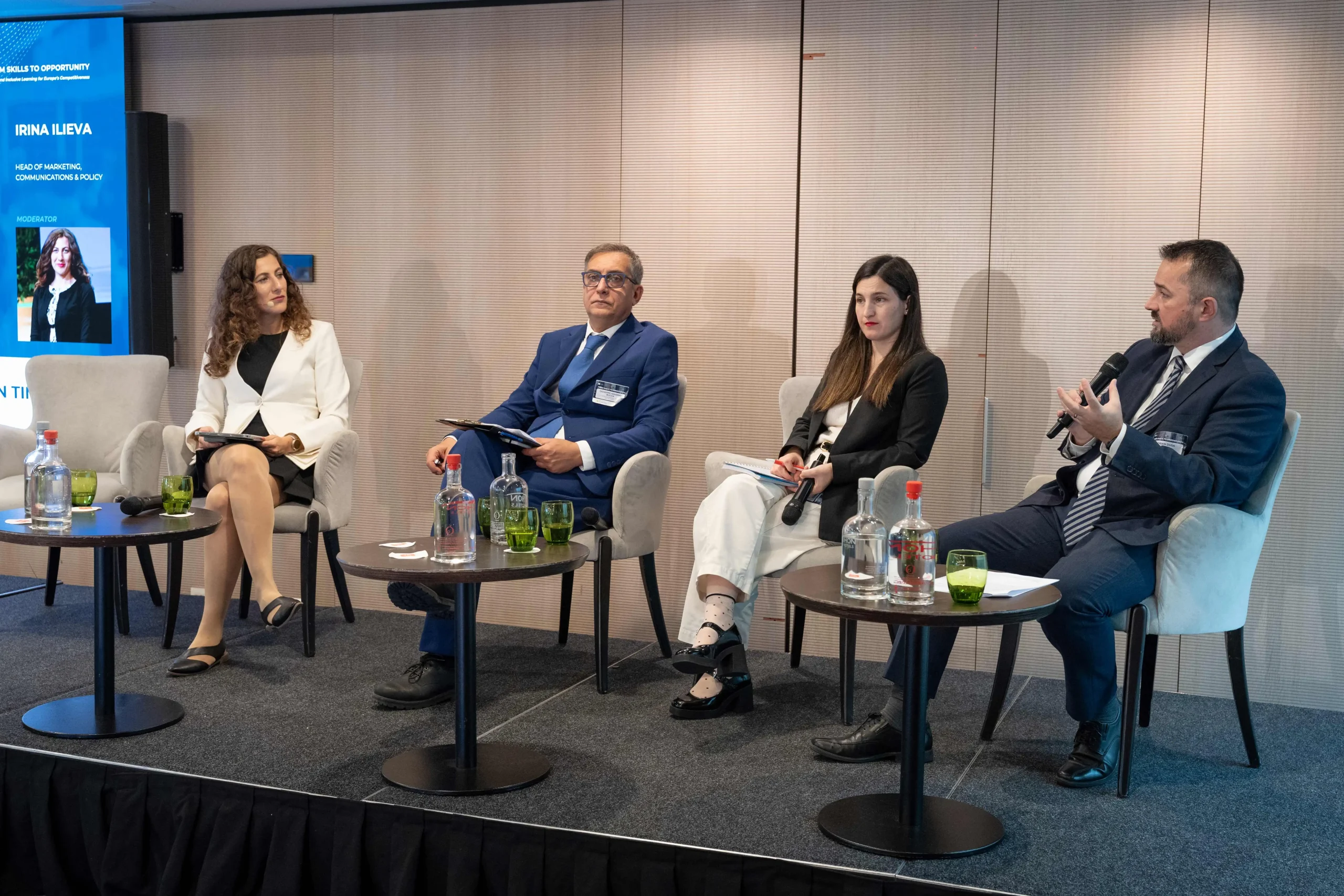
The panel, Beyond Screen Time: Digital Learning, Entrepreneurial Mindsets and the Future of Skills, examined what makes that learning effective. Access to technology needs to be accompanied by foundational skills, active participation and opportunities to practise. Critical thinking, problem-solving and the ability to keep learning remain essential as tools and tasks evolve.
Skills4Retail responds by combining digital, green and resilience skills with core retail capabilities and “learning how to learn”. Its use of online and blended learning supports more flexible access to training.
The session reinforced what gives these approaches value: relevant activities, appropriate support and practical application. In retail, understanding a digital process or assessing a sustainability choice requires both technical knowledge and human judgement.
A Shared Responsibility for Retail’s Future
Across this event, skills development emerged as a shared responsibility for employers, educators and public authorities.
Skills4Retail brings these perspectives together around retail’s changing needs. Connecting industry knowledge with accessible training helps translate Europe’s skills ambitions into opportunities for the people who will carry the sector’s transitions forward.
Find out more about Skills4Retail and how the project is supporting the development of digital, green and resilience skills across Europe’s retail sector.
 Join our mailing list