


Key Takeaways from the European Employment & Social Rights Forum
On 3–4 March in Brussels, the European Employment & Social Rights Forum (EESRF) brought together over 1,000 policymakers, social partners, businesses, and civil society representatives to discuss the future of Europe’s labour market, the transformation of work, and the role of skills in ensuring a competitive and socially resilient Europe.
The event highlighted a growing consensus across institutions and stakeholders: Europe’s ability to remain competitive will depend largely on its capacity to invest in people, skills, and quality jobs.
Competitiveness and Social Europe Go Hand in Hand
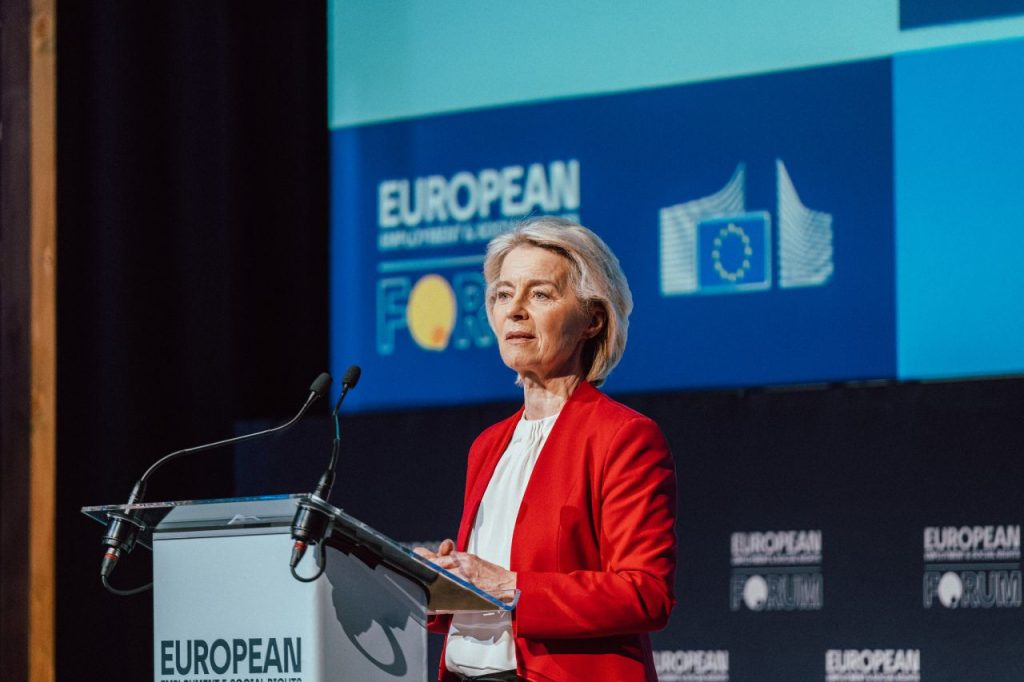
Opening the Forum, European Commission President Ursula von der Leyen stressed that Europe must address growing concerns about its global competitiveness while reinforcing its social model. Her message was clear: a strong Social Europe is a competitive Europe.
As technological transformation accelerates, particularly with the rise of artificial intelligence and digitalisation, Europe must ensure that workers have access to the skills needed to adapt to rapid change. Investing in upskilling and reskilling will therefore be essential to maintaining productivity, innovation, and economic resilience.
At the same time, von der Leyen underlined that strengthening the Single Market remains a key priority. Reducing fragmentation, addressing barriers between Member States, and ensuring the enforcement of EU labour rules are necessary steps to support both businesses and workers.
The Single Market is Ultimately About People
Former Italian Prime Minister Enrico Letta also emphasised the social dimension of Europe’s economic integration.
Reflecting on the future of the Single Market, Letta reminded participants that “the Single Market is the people.”
While the Single Market is often discussed in economic terms, its ultimate purpose is to enable mobility, opportunity, and better living conditions for Europeans. In this context, strengthening workers’ rights, facilitating labour mobility, and investing in skills development are central to ensuring that the benefits of the Single Market reach citizens across the Union.
Skills at the Heart of Europe’s Future
A central theme throughout the Forum was the growing importance of skills in navigating economic transformation.
Executive Vice-President Roxana Mînzatu highlighted the need for stronger European initiatives to support workers through transitions, including the development of a European Skills Guarantee.
Such initiatives aim to ensure that workers can continue to access training and remain relevant in a rapidly evolving labour market.
Across discussions, participants stressed that skills must not only be developed but also recognised, accredited, and rewarded through quality jobs.
Upskilling and reskilling are therefore not only labour market policies but also key drivers of Europe’s competitiveness and social cohesion.
Addressing Skills Gaps Across Sectors
The Forum also reinforced the urgent need to address skills shortages across key sectors, particularly in areas linked to the digital and green transitions.
Initiatives such as the Pact for Skills and sectoral projects like Skills4Retail are playing an important role in supporting this transformation. By identifying emerging skills needs and developing targeted training programmes, these initiatives aim to help workers and businesses adapt to new economic realities.
The retail ecosystem, for example, increasingly requires digital, customer-centric, and transversal skills, from data literacy and cybersecurity awareness to communication and problem-solving capabilities.
Investing in People for Europe’s Future
A key takeaway from the European Employment & Social Rights Forum was that Europe’s future competitiveness will depend on its ability to invest in its people.
In a world marked by technological disruption, geopolitical uncertainty, and labour market transformation, ensuring access to skills and quality jobs will be essential to building a resilient and inclusive European economy.
Ultimately, the discussions in Brussels reinforced a shared vision:
Europe’s strength lies not only in its markets and institutions, but in its people.
 Join our mailing list