


Competitiveness as a European Priority
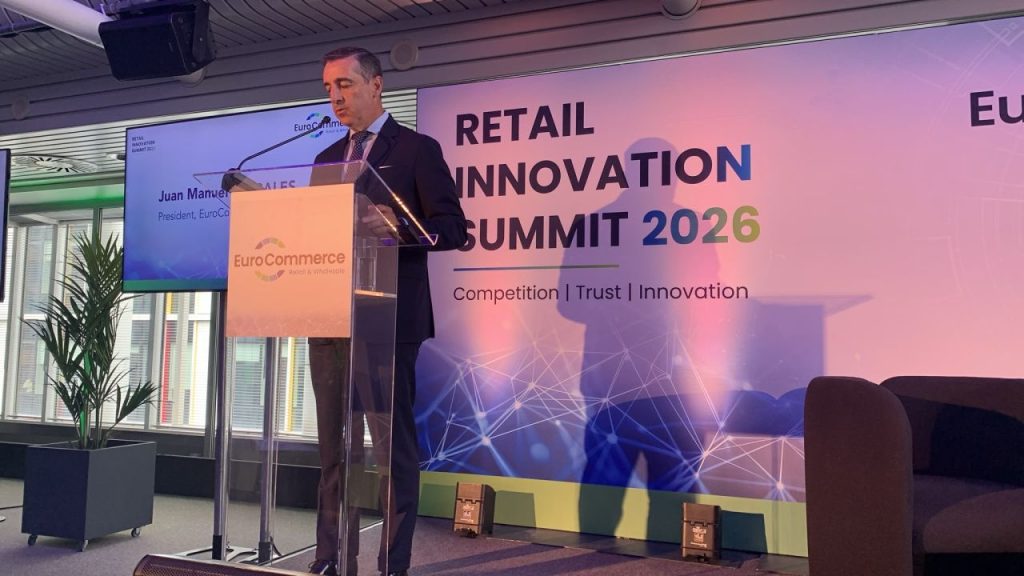
The summit opened with a clear message from EuroCommerce President Juan Manuel Morales: Europe must put competitiveness first.
Competitiveness is not simply an economic objective; it is a prerequisite for innovation, investment and long-term growth. In a rapidly evolving global market, European retailers need an environment that enables them to compete fairly and adapt quickly to changing consumer expectations.
What emerged from the discussions was not a demand for more regulation, but rather for simpler rules and greater consistency in their application. Businesses increasingly operate across borders, yet too often face fragmented enforcement and different interpretations of the same legislation. Strengthening the Single Market therefore remains as relevant as ever.
Trust as a Competitive Advantage
Competitiveness and consumer protection are often presented as competing priorities. Yet the summit’s discussions suggested that the two are deeply interconnected.
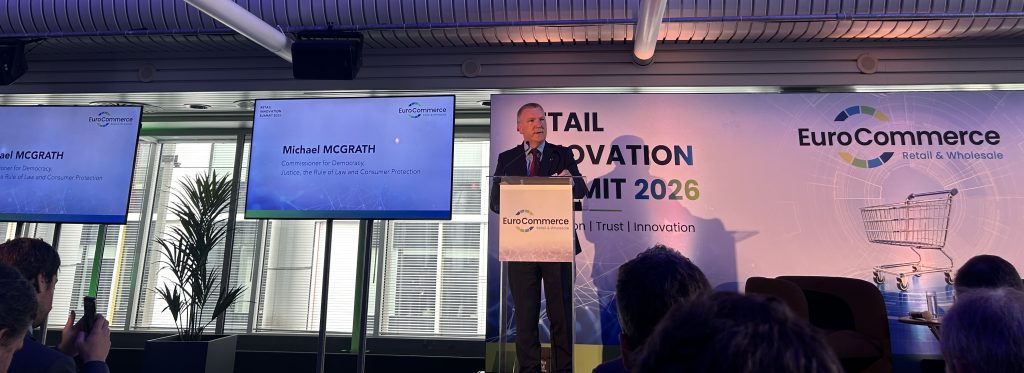
Retail remains one of Europe’s most diverse sectors and plays a fundamental role in supporting productivity, fairness and consumer trust. Commissioner Michael McGrath highlighted this dual responsibility, emphasising the importance of maintaining high standards while supporting businesses through a period of rapid technological change.
Trust has become an increasingly valuable asset. Consumers expect safe products, transparent information and fair market practices. At the same time, the growth of global e-commerce platforms has made enforcement more complex, raising concerns about non-compliant products entering the European market.
The challenge is therefore not only to develop robust legislation, but also to ensure that existing rules are enforced effectively and consistently. Without enforcement, consumer trust is weakened and businesses that comply with European standards find themselves competing on unequal terms.
AI Is Changing the Rules of the Game
Artificial intelligence is no longer a future trend for retail. It is already reshaping how consumers shop, how businesses operate and how retailers compete.
The role of AI was a recurring theme throughout the summit, culminating in the presentation of the McKinsey-EuroCommerce report Rewiring Retail in Europe: The AI Imperative.
From personalised customer experiences and inventory management to logistics and business decision-making, AI is already transforming every stage of the retail value chain. The discussion is therefore no longer about whether AI will impact retail, but about how quickly businesses can adapt to this new reality.
A broad consensus emerged across the different sessions: AI adoption is no longer optional for European retailers. It is becoming a key driver of competitiveness, innovation and resilience. Increasingly, the question is not whether retailers should adopt AI, but whether they can afford not to.
However, the conversation went beyond technology itself. Speakers repeatedly highlighted that successful AI adoption requires not only access to tools, but also the right skills, guidance and regulatory clarity.
The Skills Imperative
Behind every discussion on competitiveness, enforcement and AI lay a common factor: people.
The real challenge facing retail is not simply technological adoption. It is ensuring that workers and businesses have the skills needed to navigate change successfully.
As AI continues to transform retail operations, demand for new competences will grow. Digital literacy, data skills, AI awareness and the ability to work alongside emerging technologies are becoming increasingly important across all levels of the workforce.
The discussions highlighted that the AI transition is ultimately a skills transition. As retailers adopt new technologies, ensuring that workers have the competences needed to use them effectively will be critical. This is precisely the challenge that Skills4Retail seeks to address.
Supporting upskilling and reskilling is not merely a workforce issue; it is becoming a competitiveness issue. The future of European retail will not be determined solely by new technologies or new regulations. It will depend on Europe’s ability to equip people with the skills needed to adapt, innovate and thrive in a rapidly changing environment.
Ultimately, the discussions in Brussels pointed to a simple conclusion: competitiveness, trust and innovation are mutually reinforcing. And at the centre of all three are people.
About Skills4Retail
Skills4Retail is supporting the development of future-ready skills for the retail sector across Europe, helping learners, educators and businesses respond to the digital, green and social transitions shaping the future of work.
 Join our mailing list